
AA vs. 18500 Batteries: Why Solar Lights Use 18500 Rechargeables (and How They Work)
by 18650 Partners, 4 min reading time
by 18650 Partners, 4 min reading time
AA, 14500 and 18500 cells look alike but differ in size, voltage and chemistry. Learn how solar lights work and why 3.2V LiFePO4 18500 cells power so many of them.
Walk the battery aisle and AA, 14500 and 18500 cells can look almost the same. They aren't interchangeable, though. Size, voltage and chemistry decide what a cell can power, how long it lasts and whether it's safe in your device. This guide explains the differences and why so many solar lights now use rechargeable 18500 cells.
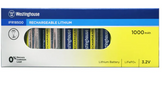
Shop: IFR18500 Lithium Iron Phosphate 3.2V Rechargeable Battery (8 Pack)
| Cell | Size (approx.) | Typical chemistry | Nominal voltage | Typical capacity |
|---|---|---|---|---|
| AA (alkaline) | 14.5 × 50.5 mm | Alkaline, single use | 1.5V | ~2,000–3,000mAh at light loads |
| AA (NiMH) | 14.5 × 50.5 mm | Nickel-metal hydride, rechargeable | 1.2V | ~2,000–2,800mAh |
| 14500 | 14 × 50 mm (AA size) | Li-ion (3.7V) or LiFePO4 (3.2V) | 3.2–3.7V | ~400–1,000mAh |
| 18500 | 18 × 50 mm | Li-ion (3.6–3.7V) or LiFePO4 (3.2V) | 3.2–3.7V | ~1,000–2,040mAh |
The names are just dimensions. "18500" means 18mm wide and 50.0mm long, and "14500" means 14mm by 50mm, the same size as an AA. That matching size is the trap. A 14500 fits in an AA slot but delivers 2.5 to 3 times the voltage, which can burn out a device built for 1.2–1.5V. Only use 14500 cells in devices that say they support them.
An 18500 is 18mm wide instead of 14.5mm, so it holds far more material than an AA-size cell. With lithium chemistry it also stores much more energy per cell, since one 3.2V LiFePO4 cell does the job of two or three NiMH AAs in series. Fewer cells means fewer contacts to corrode outdoors, a simpler circuit and a smaller battery compartment.
Shop: Panasonic NCR18500A 2040mAh 3.8A 18500 Battery
That daily cycling is why the battery matters so much. A solar light battery charges and drains every single day, often in summer heat or winter cold.
Before buying replacements, check the label on the old cell or inside the compartment:
Never mix chemistries, old and new cells, or different capacities in the same device.

Shop: IFR 14500 3.2v Battery (8 pack) Rechargeable - Solar Lights and More
Lithium cells should come with documentation: UN38.3 transport testing, IEC 62133 safety testing for portable cells, and a Safety Data Sheet (SDS/MSDS). You'll find the test documents for the cells we stock in our 18650 Data Center. For general handling, see our battery safety guidelines.
Buying for a solar lighting product line? Request a bulk quote.


