
21700 Batteries for Autonomous Cameras: High-Drain, Long-Runtime Power for Hunting and Military Use
by 18650 Partners, 3 min reading time
by 18650 Partners, 3 min reading time
Why trail, security and unattended military cameras rely on high-drain, long-lasting 21700 cells, plus when to choose Li-SOCl2 primary cells instead.
A camera that runs on its own in the field for weeks, with no outlet and nobody checking on it, lives or dies by its battery. Cellular trail cameras for hunting, perimeter cameras for remote property, and unattended surveillance and sensor systems used by military and security teams all have the same problem: they draw high bursts of current to wake, record, use infrared and transmit, then must sit quietly for days on whatever energy is left. That's why more of these systems are built around 21700 lithium-ion cells.
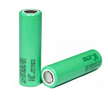
Shop: Samsung INR21700-50E 5000mAh Lithium-Ion Battery Cell – 10A – Bulk
A 21700 cell (21mm × 70mm) has roughly 45–50% more internal volume than an 18650. That translates into 4,000–5,000mAh per cell at 3.6V nominal, about 14–18Wh each. A small 3S or 4S pack of 21700s can replace a 12-AA tray or an external 12V box, with lower internal resistance and a fraction of the waste.
| Cell | Best for | Notes |
|---|---|---|
| Samsung 21700-50E 5000mAh | Maximum runtime, moderate draw | High capacity, rated 10A continuous. Ideal for long-standby cameras. |
| Samsung 21700-50S 5000mAh | Runtime plus heavy bursts | Samsung spec: 25A max continuous, 3.6V nominal. UN38.3 test summary available. |
| Samsung 21700-40T 4000mAh | Thermal, IR-heavy or video-heavy loads | 35A continuous for the hungriest electronics. |
| EVE 50E protected button top | Devices that take loose cells | Built-in protection circuit and a button top for spring-contact compartments. |
| Camelion 21700 4000mAh protected | Consumer cameras and lights | Protected cell for drop-in use. |
Shop: Samsung 50S 21700 5000 mAh SDI 25 A Bulk Pack
Not every field device should be rechargeable. Sensors that wake rarely and must run for months or years without service often use lithium thionyl chloride (Li-SOCl2) primary cells. These have very low self-discharge and a wide temperature range, but they can't handle high current bursts or be recharged. Many systems pair the two: a primary cell for the low-power sensor and clock, and a rechargeable 21700 pack (often with a small solar panel) for the camera and radio.
Shop: ER26500 C Size 3.6V 9Ah Li-SOCl Battery - Non Rechargeable
Equipment going to agencies, contractors or overseas deployments usually needs UN38.3 transport test reports, IEC 62133 safety certificates and Safety Data Sheets on file. We publish manufacturer documents in our 18650 Data Center and supply full documentation with bulk orders. See also our military battery cell supply page or request a quote.


